2026-09-27 ·
Colorado Rules on Disposing of Biohazard Materials From Littleton Homes
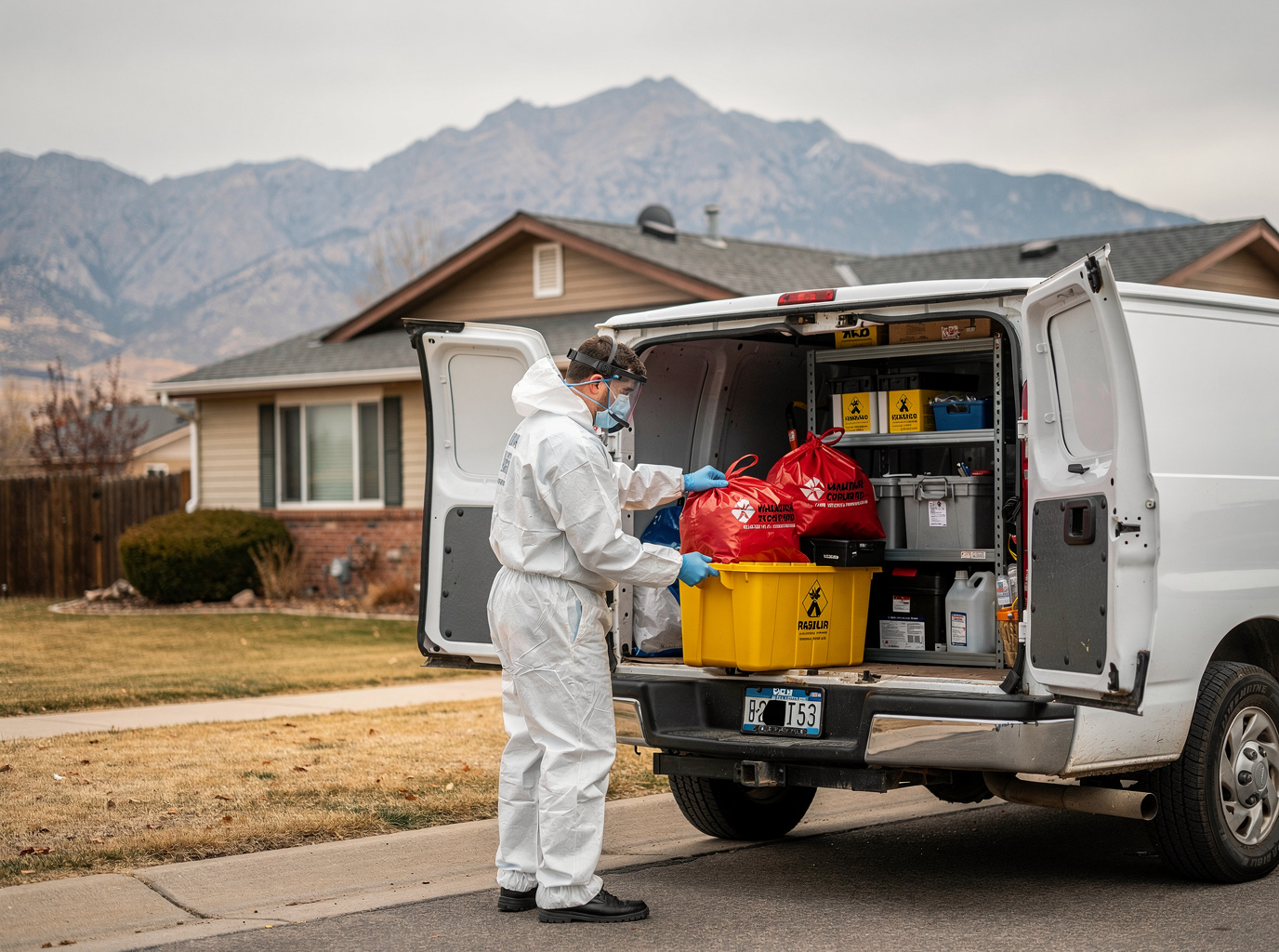
Colorado requires all biohazard materials removed from Littleton homes to be packaged, labeled, and transported only by permitted haulers to state-approved treatment or disposal sites. Arapahoe County enforces these rules through manifests that track every step from pickup in areas like Downtown Littleton or Columbine to final destruction. Homeowners cannot place such materials in regular trash or dumpsters even after basic cleaning.
Statewide Packaging and Labeling Requirements
Every container holding blood, tissue, or other regulated waste must carry the universal biohazard symbol and specific generator information before leaving the property. Materials collected during crime scene cleanup or suicide cleanup must stay segregated from ordinary household waste. Transporters document chain of custody on forms that reference the exact address in neighborhoods such as Bowles or Southpark. Failure to meet these standards can result in fines issued by the Colorado Department of Public Health and Environment. Low humidity in the semi-arid climate often dries fluids quickly on surfaces, yet the dried residue still counts as regulated waste once removed.
Transport Rules Specific to Arapahoe County
Only vehicles permitted for infectious waste may carry materials out of Littleton addresses. Routes typically head north toward approved facilities near Denver or Englewood rather than local landfills. Crews working in older homes around Historic Littleton or Sterne Park must account for narrow driveways and limited parking when staging transport containers. The four distinct seasons affect scheduling because winter freezes can delay loading while summer heat increases odor risks during short hauls. Biohazard cleanup teams maintain 24 Hour Dispatch to coordinate with permitted haulers on short notice.
How Local Housing Stock Changes Handling
Many properties in Wolhurst and Columbine feature older hardwood floors and finished basements that absorb fluids, requiring more thorough removal before transport. These conditions increase the volume of contaminated porous materials that must travel to disposal sites under manifest. Blood stain removal from hardwood floors in older Littleton houses often precedes final packaging steps. Crews document square footage and material types on transport paperwork to satisfy county inspectors. Nearby Highlands Ranch properties share the same Arapahoe County rules even though they sit across the line.
Practical Steps Homeowners Follow
Contact a permitted service immediately after authorities release the scene rather than attempting any removal. Provide the exact location details including proximity to landmarks such as Hudson Gardens or the Littleton Museum so dispatch can plan vehicle access. Keep all pets and family members away from affected rooms until transport is complete. What homeowners pay for trauma cleanup in Arapahoe County outlines typical variables that also influence disposal costs. Suicide cleanup specialists coordinate directly with permitted transporters to avoid any homeowner involvement in the manifest process.
Seasonal and Terrain Factors in Littleton
Semi-arid conditions with low humidity speed surface drying yet leave behind concentrated residues that still require full regulated handling. Spring runoff near Sterne Park can complicate outdoor scenes by spreading materials into soil that must then be excavated and manifested. Winter snow in Southpark neighborhoods slows vehicle movement and requires extra protective coverings during loading. These local realities mean disposal timelines stretch or compress depending on the month rather than following a fixed statewide calendar.